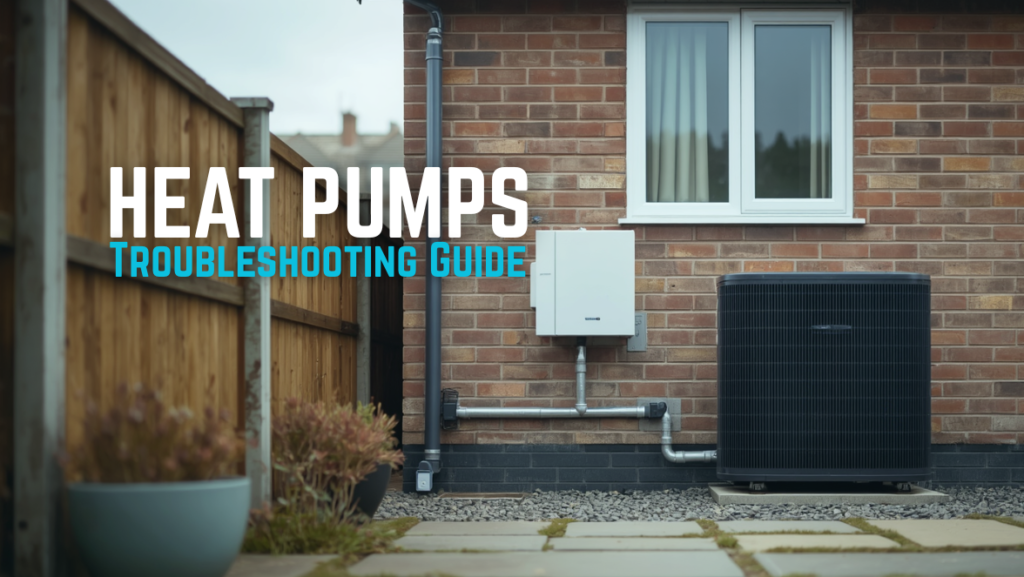
Heat Pump Troubleshooting Guide
When homeowners search for heat pump troubleshooting UK, they are usually dealing with a very practical problem. The heating has stopped, the hot water is not behaving as expected, or the outdoor unit looks wrong in cold weather. In many cases, the cause is something simple such as a setting, schedule, or power issue. In others, the system is warning you that it needs professional attention. UK manufacturer guidance consistently shows that annual servicing, correct controls, clear airflow, and prompt fault handling all matter if you want a heat pump to stay efficient and reliable.
Featured snippet answer: If your heat pump is not turning on, the most common reasons are a thermostat or schedule issue, holiday or standby mode, a power supply or breaker problem, a system fault or lockout, low filling pressure on some systems, or a weather-related condition such as defrost behaviour. Start with safe checks you can do yourself, then call a qualified engineer if the unit shows a fault code, keeps shutting down, or needs any electrical or refrigerant work.
Heat pump troubleshooting UK. Why homeowners search for help
Heat pumps do not always fail in the same way a boiler does. Sometimes they stop completely. Sometimes they keep running but give poor heat, cycle oddly, or show a warning. That is why heat pump fault finding needs a calm, structured approach. The right first step is not always a repair. It is often checking whether the controls are actually calling for heat, whether the outdoor unit has proper airflow, and whether the system is in a mode that limits heating output. Manufacturer homeowner guidance and UK advice pages repeatedly point to these simple issues before moving on to engineer-level faults.
Why is my heat pump not turning on?
The most likely causes fall into a small number of categories:
- the thermostat is not calling for heat
- the system is on a schedule, holiday mode, or standby setting
- power to the unit has been interrupted or a breaker has tripped
- the heat pump has entered a fault or lockout state
- the heating system pressure or water volume is too low on some systems
- the unit is in defrost, emergency mode, or another protective state rather than a true failure
That is the important distinction. “Not turning on” does not always mean the heat pump is broken. In cold UK weather, an outdoor unit may look frosty, pause heating temporarily, or make a little more noise during defrost, and that can still be normal. Vaillant notes that a defrost cycle is a normal function, while Mitsubishi’s homeowner guidance describes defrost as normal operation with no action necessary.
Heat pump troubleshooting UK first steps you can safely do yourself
Before you book a call-out, start with the checks that are safe for a homeowner. These are the steps most likely to solve a control or operating issue without crossing into anything electrical, sealed-system, or unsafe.
1. Check the thermostat and target temperature
It sounds obvious, but it is one of the most common causes. Make sure the thermostat is set high enough to actually call for heat, and make sure the system is in heating mode. Some systems will appear inactive simply because the target temperature is already met or the control is not demanding output. Ideal Heating specifically notes that controls and thermostat settings are central to correct operation.
2. Check schedules, holiday mode, and operating mode
A heat pump may not respond the way you expect if it is running to a timed schedule or a holiday setting. Mitsubishi’s homeowner guidance says holiday mode lowers indoor temperature and flow temperatures to provide background heating while you are away. Its quickstart material also notes that prohibit, schedule, or holiday mode can explain why the heating system does not get up to set temperature.
3. Check the power supply and consumer unit
Some heat pumps do not have a normal on/off switch on the product itself and rely on the household power supply and fuses or circuit breakers. Vaillant notes this directly in its operating guidance. If the breaker has tripped or the isolator is off, the system may appear dead. At the same time, do not start taking covers off or attempting internal resets beyond the user manual.
4. Look for a visible fault code or warning message
A displayed fault code matters. Vaillant explains that heat pump faults appear as fault codes, and that some can sometimes be reset using the user manual while others are clearly cases for an engineer. If your controller is showing a code, note it down before doing anything else. That will help you decide whether this is a simple reset situation or a service visit.
5. Check whether frost or snow is simply affecting airflow
This is especially relevant for air source heat pump problems in winter. Some frost is normal. A complete lack of airflow is not. Vaillant and Energy Saving Trust both advise keeping the outdoor unit clear of leaves and obstructions, while Mitsubishi says homeowners should clear leaves and snow from around the outdoor unit to help winter performance.
6. Check whether the system is running in a protected or emergency mode
Some systems have a backup heater or emergency mode if the heat pump itself fails. Daikin’s user guidance notes that when the heat pump fails to operate, the backup heater or booster heater may take over either automatically or with manual interaction. That means “strange behaviour” is not always total failure. It may be the system protecting comfort until an engineer attends.
Symptom, likely cause, and next step
The table below reflects the most common common heat pump issues UK homeowners run into, based on UK homeowner guidance and manufacturer materials.
| Symptom | Likely cause | Best next step |
|---|---|---|
| Heat pump not starting at all | Power issue, breaker, no heating demand, standby mode | Check thermostat, schedule, and consumer unit |
| Heating not reaching target temperature | Holiday mode, prohibit mode, control settings | Review operating mode and schedule |
| Outdoor unit looks icy | Normal frost or defrost cycle | Monitor first, keep airflow clear |
| Outdoor unit blocked by leaves or snow | Restricted airflow | Remove debris safely from around the unit |
| Fault code on controller | System fault or lockout | Record code and check user manual |
| Repeated shutdowns or poor comfort | Pressure issue, sensor fault, component fault, service need | Arrange qualified diagnosis |
DIY-safe checks versus technician-only issues
This is where a good heat pump repair guide needs to be clear. Not every problem is yours to solve.
DIY-safe checks
These are usually safe for homeowners:
- review thermostat and heating mode
- check time schedules and holiday mode
- confirm the power supply and breaker status
- note any fault code on the display
- clear leaves, branches, and snow from around the outdoor unit
- compare current behaviour with the user manual
Issues that require a qualified technician
These should not be treated as DIY jobs:
- opening the casing
- electrical repairs or internal breaker resets
- refrigerant-related work
- persistent low pressure or water-volume faults
- sensor faults and communication faults
- repeated lockouts, overheating, or over-pressurisation
Vaillant’s fault code guidance is explicit that some faults are cases for an engineer and that opening the heat pump casing can be dangerous. That is the right line to draw. If the system moves beyond controls and airflow, stop there and call a competent professional.
Common heat pump problems in UK conditions
The UK climate brings its own pattern of issues. Frost, wet weather, leaf debris, and long winter run-times all affect how a system behaves. That does not mean heat pumps struggle in winter. It means homeowners need to understand the difference between normal cold-weather operation and a real fault.
A frosty outdoor unit is not automatically a problem. Vaillant says icing can be perfectly normal and that the defrost cycle is designed to maintain efficient operation in cold temperatures. Mitsubishi similarly advises clearing leaves and snow from around the unit, which suggests the bigger concern is usually restricted airflow rather than the mere presence of winter weather.
Another common issue is controls. Heat pumps respond best to sensible, steady settings rather than constant aggressive changes. Ideal Heating advises setting your thermostat appropriately and avoiding frequent adjustments, and manufacturer user guides show how schedules and holiday modes can materially affect output.
Practical troubleshooting checklist for quick readers
Use this checklist if your heat pump not working problem has just started:
- Is the thermostat set high enough to call for heat?
- Is the system definitely in heating mode?
- Has holiday mode, schedule mode, or standby been activated?
- Is there power to the unit, and is the breaker on?
- Is the outdoor unit clear of leaves, bins, branches, snow, and other obstructions?
- Is the system showing a fault code?
- Is the unit simply in a temporary defrost cycle?
- Has the system been serviced within the last year?
If you get through that list and the problem remains, it has moved beyond basic heat pump reset and diagnostics and into service territory.
Warning signs that urgent servicing or repair is needed
Some issues should not wait. Arrange professional help promptly if you notice any of the following:
- the system repeatedly trips or loses power
- a fault code keeps returning after a basic user reset
- the display indicates overheating, over-pressure, or persistent comfort protection
- there is no heating or hot water in cold weather
- the system has poor performance plus unusual noise
- the unit appears to run only in emergency or backup mode
Energy Saving Trust recommends annual servicing for heat pumps, and the Heat Pump Association says systems should be serviced annually in line with the manufacturer’s instructions by a competent person. In practice, that means troubleshooting and maintenance go together. Many “faults” are really signs a service is overdue.
If you want professional help rather than guesswork, you can get a quote for expert support here.
When troubleshooting points to the system, not just the fault
Sometimes the issue is not a one-off failure. It is a sign that the system, controls, or overall setup needs reviewing. Repeated comfort complaints, awkward controls, or recurring winter performance issues can all point to a homeowner needing better product information, the right controls, or a more suitable setup.
That is why troubleshooting content should not stop at “reset the unit”. It should also help readers understand whether their current system and controls are actually right for the property. If you are still researching options or comparing systems, it is worth exploring the available heat pump products and system choices before making the next decision.
FAQ
Why is my heat pump not turning on?
The most common reasons are incorrect thermostat settings, schedule or holiday mode, a power or breaker issue, a fault code or lockout, or a protective operating state such as defrost or emergency mode. Start with the control panel, power supply, and outdoor airflow checks before calling an engineer.
Is it normal for a heat pump to ice up in winter?
Yes, some icing can be normal in cold weather. Air source heat pumps use a defrost cycle to deal with frost, and manufacturers note that this can temporarily change noise or behaviour. The key is to keep the outdoor unit clear so airflow is not restricted.
Can I reset my heat pump myself?
Sometimes, yes, but only in line with the user manual. Vaillant says some faults may be resolved or temporarily cleared by a reset, while others need an engineer. Do not open the casing or attempt internal electrical work.
What checks can I do before calling a professional?
Check the thermostat, operating mode, holiday or timer settings, power supply, breaker status, visible fault code, and whether leaves or snow are blocking the outdoor unit. These are the main homeowner-safe checks supported by UK manufacturer guidance.
How often should a heat pump be serviced?
Usually once a year. Energy Saving Trust recommends annual servicing, and industry guidance says servicing should follow the manufacturer’s instructions and be carried out by a competent person.
Conclusion
A good heat pump troubleshooting UK approach starts with safe, sensible checks. Look at the thermostat, schedule, power supply, fault display, and outdoor airflow first. In many cases, that is enough to spot the issue. But if the system shows a persistent fault, keeps shutting down, loses pressure, or needs anything beyond basic controls and cleaning around the unit, that is the point to stop troubleshooting and bring in a qualified professional. UK homeowner guidance is consistent on that. Safe checks are useful. Internal electrical, refrigerant, and casing work are not DIY territory.